новый блог
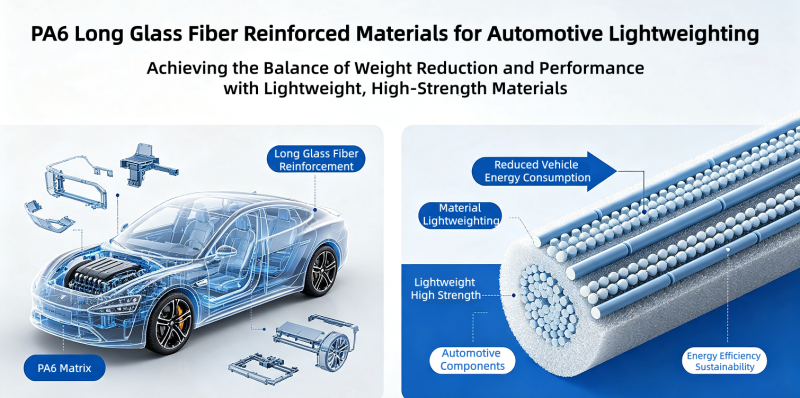
Движимая двойными силами облегчения веса автомобилей и глобальными целями по сокращению выбросов углерода, замена металла пластиком стала ключевым направлением инноваций в автомобильных материалах.PA6, армированный длинным стекловолокном(LFT-PA, полиамид, армированный длинным стекловолокном), благодаря своей превосходной удельной прочности, ударной вязкости и термостойкости, быстро расширяет сферу применения от ненагруженных компонентов до структурных и несущих элементов, становясь важнейшим связующим звеном между традиционными инженерными пластиками и металлическими материалами.
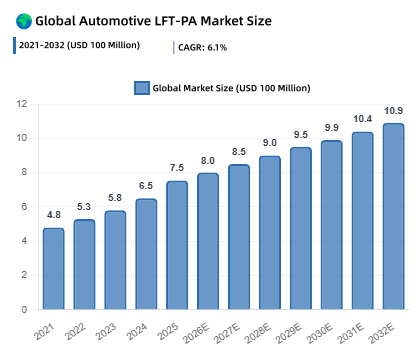
В 2025 году мировой рынок полиамида, армированного длинным стекловолокном (LFT-PA), для автомобильной промышленности оценивался примерно в 5,97 млрд юаней (754 млн долларов США), при этом объем продаж достиг 210 000 метрических тонн. Ожидается, что к 2032 году мировой рынок приблизится к 9,016 млрд юаней, со среднегодовым темпом роста (CAGR) 6,1% в период с 2026 по 2032 год.
В этой статье представлен систематический анализ возможностей и проблем, с которыми сталкивается PA6, армированный длинным стекловолокном в эпоху облегчения веса автомобилей, охватывающий рыночную ситуацию, технические характеристики, политические факторы, структуру отраслевой цепочки и конкурентную динамику.
Автомобильный полиамид, армированный длинным стекловолокном (LFT-PA), относится к армированным термопластичным композиционным материалам, в которых непрерывный ровинг из стекловолокна тщательно пропитывается расплавом PA6/PA66 в процессе пултрузии или компаундирования в линии. После грануляции длина волокна обычно остается на уровне примерно 5–25 мм.
По сравнению с материалами, армированными коротким стекловолокном, длинные стекловолокна сохраняют более высокое соотношение сторон, что позволяет формованным компонентам достигать значительно лучших показателей ударопрочности, сопротивления ползучести и удельной прочности.
Основные конкурентные преимущества PA6, армированного длинным стекловолокном, отражены в следующих ключевых показателях эффективности:
| Показатель эффективности | Типичное значение | Сравнительное преимущество |
|---|---|---|
| Предел прочности при растяжении | 120–195 МПа | Сопоставимо с некоторыми алюминиевыми сплавами |
| Модуль упругости при изгибе | 8 600–11 000 МПа | Высокая жесткость и стабильность размеров |
| Плотность | ≈ 1,15 г/см³ | Примерно на 40% ниже, чем у алюминиевых сплавов |
| Термостойкость | 80–150°C | Соответствует типичным условиям эксплуатации под капотом |
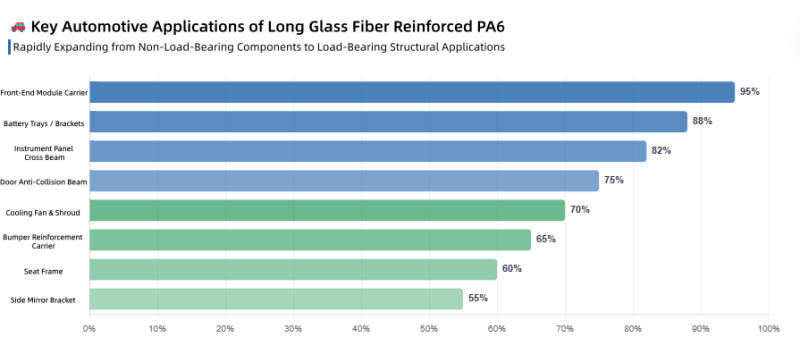
Литые под давлением компоненты способны сохранять высокую жесткость, сопротивление ползучести и превосходную ударную вязкость при температурах в диапазоне от 80–150°C. Они широко используются в несущих конструкциях, таких как передние модули, лотки для аккумуляторов и дверные противоударные балки.
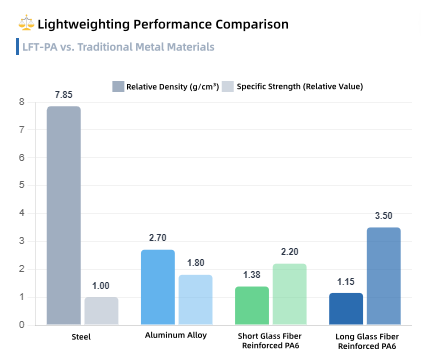
Армированный стекловолокном PA6/PA66 позволяет достичь снижения веса на 60%–65% при замене алюминиевых сплавов. Интегрированное литье под давлением также позволяет сократить количество компонентов с 12 до всего 1, что приводит к потенциальному снижению производственных затрат на 30%.
В 2025 году мировой рынок автомобильного полиамида, армированного длинным стекловолокном, оценивался примерно в 5,97 млрд юаней (754 млн долларов США), при объеме продаж, достигшем 210 000 тонн, и средней цене 3 815 долларов США за тонну. Ожидается, что к 2032 году выручка мирового рынка приблизится к 9,016 млрд юаней, что соответствует среднегодовому темпу роста (CAGR) в 6,1%.
В более широком смысле, мировой рынок полиамида, армированного длинным стекловолокном, включая неавтомобильные применения, оценивался примерно в 942 млн долларов США в 2025 году, при объеме продаж, достигшем 260 000 тонн. Прогнозируется, что к 2034 году рынок достигнет 1,641 млрд долларов США, что соответствует среднегодовому темпу роста (CAGR) в 8,5%.
Будучи крупнейшим в мире производителем автомобилей, на долю которого приходится примерно 32% мирового автомобильного производства, Китай продолжает укреплять свои позиции на рынке материалов из полиамида 6 (PA6), армированного длинным стекловолокном.
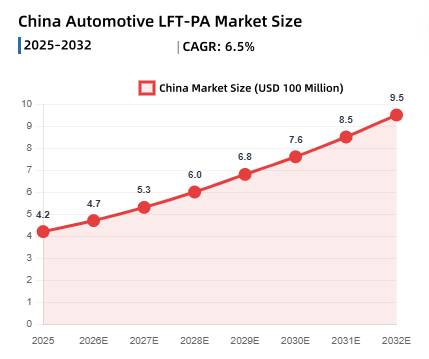
Согласно прогнозам QYResearch, выручка на рынке автомобильных материалов из полиамида, армированного длинным стекловолокном, в Китае, как ожидается, достигнет 1,275 млрд долларов США к 2032 году, при среднегодовом темпе роста (CAGR) 6,5% в период с 2026 по 2032 год.
Общий объем китайского рынка нейлона, армированного стекловолокном, по прогнозам, достигнет 7,915 млрд долларов США к 2032 году, увеличиваясь при среднегодовом темпе роста (CAGR) 5,0%.
С 1 января 2026 года Китай внедрил обязательный национальный стандарт GB 27999—2025, который устанавливает целевые показатели выбросов диоксида углерода для легковых автомобилей. Стандарт также устанавливает целевой показатель среднего уровня выбросов CO₂ для легковых автомобилей примерно 78,2 г/км к 2030 году.
В апреле 2026 года Министерство промышленности и информационных технологий (MIIT) совместно с четырьмя другими государственными ведомствами выпустило Руководство по экологичному проектированию промышленной продукции (издание 2026 года). Облегчение конструкции определено как одно из 11 ключевых направлений экологичного проектирования продукции.
«К автомобилям на новых источниках энергии предъявляются особенно высокие требования по снижению веса и безопасности аккумуляторов. В некотором смысле снижение веса представляет собой экономическую ценность».
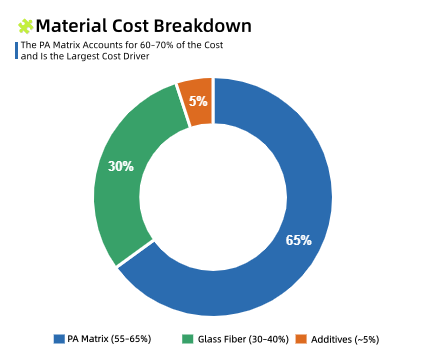
На долю сырья в совокупности приходится примерно 75%–80% от заводской цены, что делает рыночные цены на полиамидную смолу основным фактором колебаний затрат.
Мировой рынок можно в широком смысле разделить на два основных лагеря: международные лидеры отрасли и китайские производители.
Международные компании: BASF, LANXESS, DuPont, Solvay, Celanese, SABIC, RTP, Mitsubishi Chemical, Asahi Kasei, LyondellBasell и другие.
Китайские компании: Kingfa, Shanghai Pret, Nanjing Julong, Xiamen LFT и другие.
Ожидается, что мировой рынок электромобилей достигнет 45 миллионов единиц в год к 2030 году. Потребность в облегчении конструкции в электромобилях стоит еще более остро.
Длинноволокнистый стеклонаполненный нейлон может использоваться в структурных компонентах аккумуляторных батарей, обеспечивая предел прочности на разрыв ≥150 МПа при снижении плотности примерно на 40% по сравнению с алюминиевыми сплавами.
Замена традиционных металлических компонентов высокоэффективными длинноволокнистыми термопластами открывает значительные возможности для снижения веса, структурной интеграции и оптимизации производственных затрат.
Автомобили на новых источниках энергии, использующие эти материалы, могут достичь снижения веса автомобиля до 15%, что потенциально увеличивает запас хода с 550 км до 680 км.
Технологические инновации все больше сосредоточены на повышенном содержании стекловолокна, антипиреновой модификации и низком уровне выбросов ЛОС. Литье под давлением длинноволокнистого стеклопластика постепенно вытесняет армирование коротким волокном, обеспечивая повышенную структурную прочность.
Отрасль постоянно улучшает эксплуатационные характеристики материалов за счет оптимизированных процессов модификации сополимеров и технологий обеспечения межфазной совместимости.
На долю полиамидных (PA) смол приходится примерно 60%–70% стоимости материалов, при этом цены колеблются в зависимости от цепочки создания стоимости бензол–адипиновая кислота. Производство стекловолокна является энергоемким и крайне чувствительным к ценам на природный газ. С 2025 года колебания мировых цен на энергоносители и возросшая неопределенность в цепочках поставок еще больше усилили ценовое давление.
Полиамид, армированный длинным стекловолокном, обычно на 20%–30% дороже альтернатив, армированных коротким волокном. По сравнению с традиционными материалами, такими как сталь, он по-прежнему сталкивается со значительным ценовым разрывом, что ограничивает его проникновение в сегмент массовых, чувствительных к цене компонентов.
Материал требует точного контроля температуры и специализированного оборудования для литья под давлением, что может ограничить его использование небольшими автомобильными поставщиками с ограниченными техническими возможностями.
Ключевое сырье, такое как капролактам и специальные виды стекловолокна, подвержено периодическому дефициту поставок, что влияет на графики производства и стоимость материалов. Тарифная политика США в 2025 году также внесла дополнительную неопределенность в глобальные цепочки поставок.
По мере роста требований к облегчению веса автомобилей и развития технологий производства материалов, PA6, армированный длинным стекловолокном, расширяет сферу применения от кузовных панелей и компонентов интерьера до более высокотехнологичных областей, таких как структурные компоненты шасси и системы силовых агрегатов.
Китайские производители быстро укрепляют позиции на рынке среднего ценового сегмента, при этом годовая производственная мощность на одну производственную линию достигает 4 000–20 000 тонн. По мере дальнейшего развития технологического опыта и эффекта масштаба ожидается, что материалы отечественного производства будут и дальше сокращать разрыв с международными лидерами в области стабильности характеристик и ценовой конкурентоспособности.
Развитие автономного вождения создает новые возможности для использования PA6, армированного длинным стекловолокном, в прецизионных структурных компонентах, таких как корпуса датчиков и компоненты радаров. В то же время электрификация транспортных средств продолжает расширять области применения, включая аккумуляторные батареи и компоненты электродвигателей.
Более строгие глобальные экологические нормы стимулируют разработку материалов с низким содержанием ЛОС и пригодных для вторичной переработки. Ожидается, что поиск устойчивых решений, таких как нейлоны на биологической основе, включая PA11, откроет новые возможности для роста отрасли.
Материалы из PA6, армированные длинным стекловолокном, вступают в стратегически важный период возможностей, обусловленный облегчением веса автомобилей. Под совокупным влиянием более строгих норм по выбросам углерода, роста проникновения автомобилей на новых источниках энергии и ускорения процесса замены металла пластиком, прогнозируется, что мировой рынок вырастет примерно с 6 миллиардов юаней в 2025 году до более чем 9 миллиардов юаней к 2032 году.
Тем не менее, волатильность цен на сырье, высокие требования к переработке и стабильность цепочек поставок остаются ключевыми проблемами для отрасли.
Для поставщиков материалов приоритетами станут постоянная оптимизация соотношения цены и качества, углубление совместных разработок с автопроизводителями и инвестиции в экологичные и устойчивые технологии производства материалов.
Для автопроизводителей материалы из PA6, армированные длинным стекловолокном, больше не являются просто «опциональным решением», а все чаще становятся «необходимой» технологией для получения преимущества в гонке за облегчение веса автомобилей.
Подписывайтесь на нас :


-- получать обновления с последними темами

 Эл. почта
 русский
 English
 français
 Deutsch
 italiano
 español
 português
 العربية
 日本語
日本語 한국의
한국의 中文
中文