новый блог
Вы когда-нибудь замечали обозначения вроде "V-0" или "V-1" на осветительном приборе? Скорее всего, нет — и это совершенно нормально.
В отличие от яркости или цветовой температуры, эти рейтинги не влияют на работу света в повседневном использовании. Но в случае пожара они могут иметь критическое значение для безопасности.
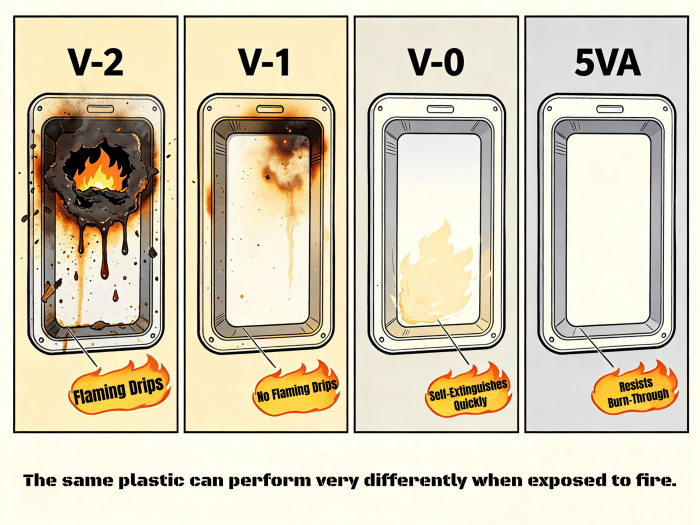
Большинство корпусов светильников изготовлено из пластика. После воспламенения некоторые виды пластика горят медленно и самостоятельно затухают, в то время как другие продолжают интенсивно гореть и могут даже выделять горящий расплавленный материал, распространяя огонь. Ключевое различие заключается в их классе огнестойкости.
В этой статье мы разберём различия между UL 94 V-0, V-1, V-2 и 5VA и объясним, что на самом деле означает каждый класс.
UL 94 — это стандарт испытаний на воспламеняемость пластиковых материалов, разработанный организацией Underwriters Laboratories (UL). Это наиболее широко используемый в мире стандарт для оценки огнестойкости пластмасс.
Хотя он возник в США, UL 94 стал признанным во всём мире эталоном для классификации огнестойкости в индустрии освещения, электротехники и электроники.
Стандарт UL 94 включает несколько методов испытаний. Для пластиковых материалов, используемых в корпусах светильников, наиболее распространёнными классами являются:
Перед сравнением классов важно понять, как проводится испытание на вертикальное горение UL 94 .
Стандартный пластиковый образец для испытаний устанавливается вертикально и подвергается воздействию пламени на нижнем конце в течение 10 секунд. После удаления пламени оцениваются следующие факторы:
Процедура испытания идентична для V-2, V-1 и V-0. Единственное различие заключается в том, как материал ведёт себя во время испытания, что и определяет его классификацию по огнестойкости.
| Рейтинг UL 94 | Общее время остаточного горения (После двух воздействий пламенем) |
Макс. время остаточного горения (При каждом воздействии пламенем) |
Горящие капли Воспламеняют хлопок? |
Типичные характеристики |
|---|---|---|---|---|
| V-0 | ≤ 50 секунд | ≤ 10 с | Нет | Самый высокий уровень огнестойкости. Быстрое самозатухание без горящих капель. |
| V-1 | ≤ 250 секунд | ≤ 30 с | Нет | Хорошая огнестойкость. Самозатухание без воспламенения хлопка. |
| V-2 | ≤ 250 секунд | ≤ 30 с | Да | Горящие капли допускаются и могут воспламенить хлопок. |
| HB | — | — | — | Горение в горизонтальном положении. Скорость горения ≤ 40 мм/мин. Самая низкая классификация UL 94. |
Основное различие заключается в том, насколько быстро материал самозатухает после удаления пламени.
Вывод:Материалы V-0 затухают значительно быстрее, обеспечивая более высокий уровень пожарной безопасности.
Процедура испытания и ограничения по времени остаточного горения для обоих рейтингов одинаковы. Единственное различие заключается в поведении горящих капель.
Горящие капли могут распространять огонь на близлежащие материалы, что делает V-2 менее подходящим для применений, требующих более высокого уровня пожарной безопасности.
HB (горизонтальное горение) — это совершенно другой метод испытаний. Вместо вертикального крепления образца материал испытывается в горизонтальном положении, а скорость горения измеряется.
Для получения классификации HB скорость горения не должна превышать 40 мм/мин (в зависимости от толщины образца).
HB является самой низкой классификацией UL 94 и обычно не рекомендуется для критически важных с точки зрения безопасности осветительных применений.
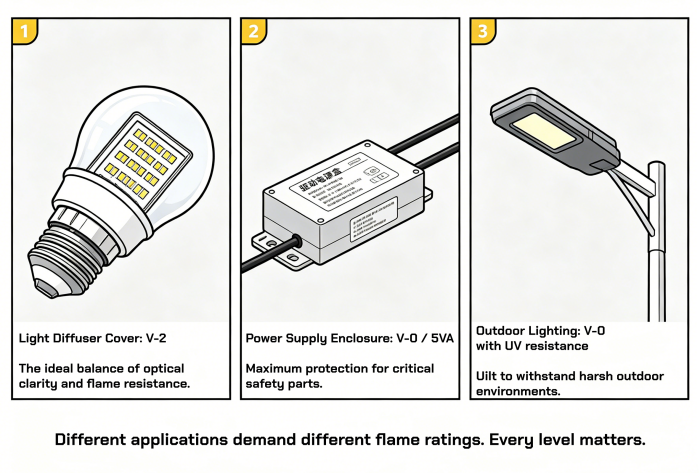
Для осветительных изделий, требующих максимальной пожарной безопасности, таких как корпуса светодиодных драйверов, корпуса блоков питания и критически важные компоненты наружного освещения — часто указывается классификация UL 94 5V.
По сравнению с рейтингами серии V испытание 5V является гораздо более строгим. Образец подвергается воздействию большего пламени пять раз, при этом каждое воздействие пламенем длится пять секунд. Испытание также оценивает, способен ли плоский образец панели противостоять прожиганию насквозь.
В результате, 5VA широко считается наивысшим рейтингом огнестойкости в стандарте UL 94. Он обычно указывается для критически важных с точки зрения безопасности электрических корпусов и компонентов освещения, где необходима превосходная огнестойкость.
Одно из самых распространённых заблуждений заключается в том, что более высокий рейтинг огнестойкости означает, что материал не может гореть. Это неверно.
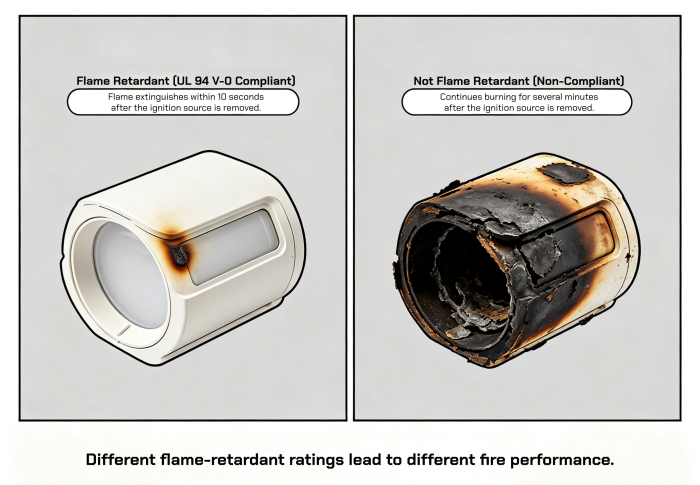
Огнестойкие материалы предназначены для замедления распространения огня и самостоятельного затухания после удаления источника возгорания, а не для бесконечного сопротивления огню.
Даже материал UL 94 V-0 может воспламениться, если он постоянно подвергается воздействию пламени или чрезмерного нагрева.
Огнестойкость помогает замедлить развитие пожара, предоставляя ценное время для эвакуации и реагирования в чрезвычайных ситуациях, а не делает материал полностью пожаростойким.
Одной только огнестойкости недостаточно для применения в наружном освещении.
Длительное воздействие УФ-излучения может привести к тому, что пластики станут хрупкими, изменят цвет и потеряют механическую прочность. Это также может со временем снизить эффективность огнезащитных свойств.
Выбирайте стабилизированный к УФ-излучению поликарбонат (PC) или другие устойчивые к УФ-излучению инженерные пластики для обеспечения долговечности и безопасности в течение длительного времени.
Понимание этих различий помогает инженерам, дизайнерам и отделам закупок выбирать подходящий материал для каждого применения.
Наши инженеры с удовольствием порекомендуют наиболее подходящий материал с учетом требований к вашему продукту, метода обработки и целевых сертификатов.
Свяжитесь с нами сегодня, чтобы обсудить ваше применение в области освещения или запросить бесплатную консультацию по материалам.
Подписывайтесь на нас :


-- получать обновления с последними темами

 Эл. почта
 русский
 English
 français
 Deutsch
 italiano
 español
 português
 العربية
 日本語
日本語 한국의
한국의 中文
中文